
The Labouchère system, also called the cancellation system or split Martingale, is a negative progression that uses a written number sequence to decide each bet. It is the most complicated system on this site, and that complexity is its main danger: it looks like a method, it feels like control, and it loses the house edge on every unit staked just like the simplest system does. I explain it here so you can recognise it, understand what a bad run does to the sequence, and see why “you only need to win a third of your bets” is the most misleading sentence in roulette.
What Is the Labouchère System?
The Labouchère is a cancellation system for even-money bets: red or black, odd or even, 1-18 or 19-36. You write down a sequence of numbers that adds up to the profit you want. Each bet is the sum of the first and last numbers. When you win, you cross out both. When you lose, you write the amount you just lost at the end of the sequence.
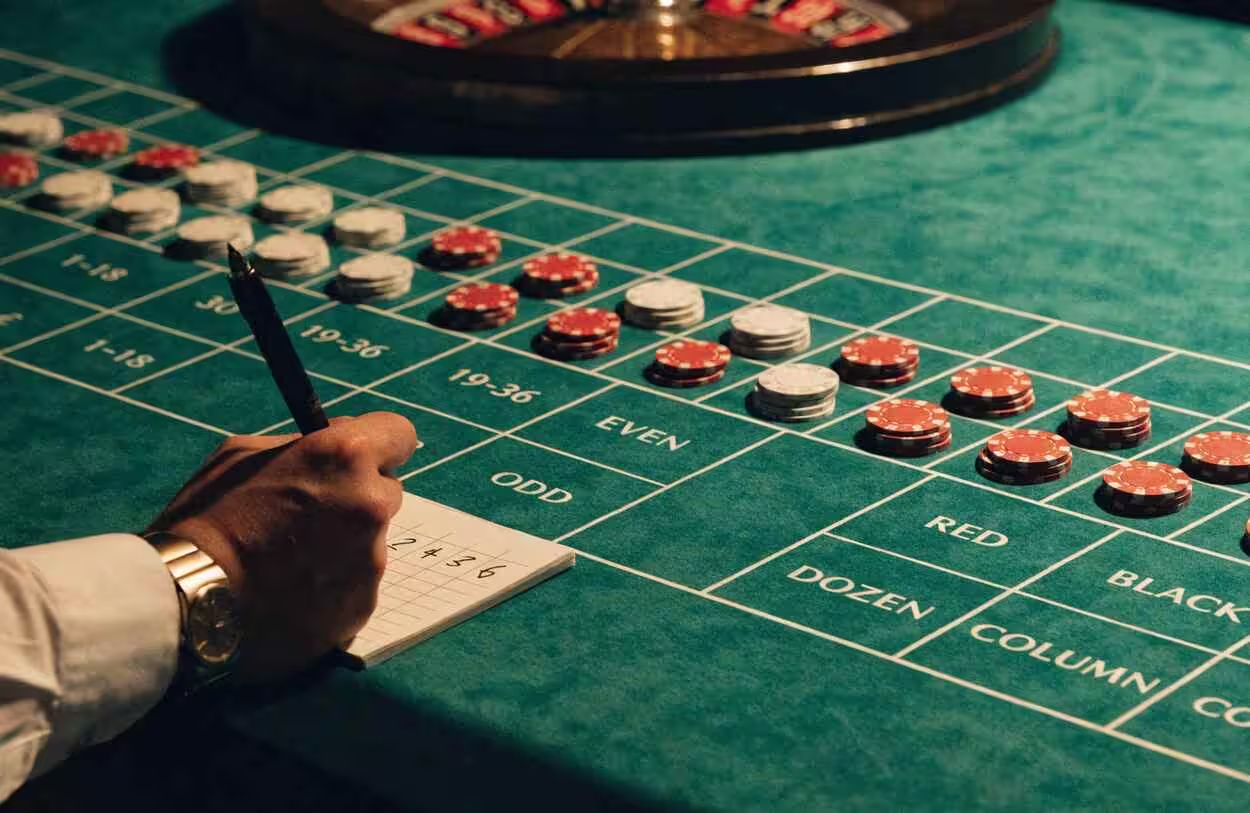
The sequence is complete when every number is crossed out, and at that moment you are up by the original target. Because a win removes two numbers and a loss adds one, the sequence can in theory be completed with wins on only a third of the bets. That is the sales pitch. What it leaves out is that every number added after a loss is larger than the ones before it, so the bets grow while you are losing, and the third of bets you need to win is measured in count, not in money.
The Profit Target and the Sequence
Before the first bet you decide how much you want to win and write a sequence that adds up to it. The sequence sets the starting bet and the pace. What it cannot set is the ending: a losing run rewrites the sequence no matter how carefully it was chosen.
| Target | Example Sequence | First Bet | What it means |
|---|---|---|---|
| 10 euro | 1, 2, 3, 2, 2 | 3 euro (1+2) | Small bets, slow growth on losses |
| 15 euro | 1, 2, 3, 4, 5 | 6 euro (1+5) | Larger numbers at the end mean larger additions after a loss |
| 20 euro | 2, 4, 4, 4, 6 | 8 euro (2+6) | Higher stakes from the first spin, faster escalation |
| 10 euro | 2, 2, 2, 2, 2 | 4 euro (2+2) | Flat start; the sequence still grows on every loss |
How the System Works
The rules are simple. Tracking them at a table is not, which is why the system is usually played online with the sequence on paper beside the screen.
A Winning Example and a Losing One
Every explanation of the Labouchère shows the winning run. Here is that run, followed by the one nobody shows. Both start from the same sequence: 1, 2, 3, 2, 2, target 10 euro, betting on red.
The run that works
| Spin | Sequence | Bet | Result | Action |
|---|---|---|---|---|
| 1 | 1, 2, 3, 2, 2 | 3 | Win | Cross out 1 and 2 |
| 2 | 2, 3, 2 | 4 | Loss | Add 4 to end |
| 3 | 2, 3, 2, 4 | 6 | Win | Cross out 2 and 4 |
| 4 | 3, 2 | 5 | Win | Cross out 3 and 2 |
| 5 | empty | 0 | Done | Target reached: +10 euro |
Three wins out of four spins. That is a 75 percent hit rate on a bet that lands 48.6 percent of the time. The example proves the arithmetic works; it says nothing about how often the wheel cooperates.
The run that does not
| Spin | Sequence | Bet | Result | Total lost |
|---|---|---|---|---|
| 1 | 1, 2, 3, 2, 2 | 3 | Loss | 3 |
| 2 | 1, 2, 3, 2, 2, 3 | 4 | Loss | 7 |
| 3 | 1, 2, 3, 2, 2, 3, 4 | 5 | Loss | 12 |
| 4 | 1, 2, 3, 2, 2, 3, 4, 5 | 6 | Loss | 18 |
| 5 | 1, 2, 3, 2, 2, 3, 4, 5, 6 | 7 | Loss | 25 |
| 6 | 1, 2, 3, 2, 2, 3, 4, 5, 6, 7 | 8 | Loss | 33 |
Six losses in a row on an even-money bet happens about once every 55 sequences. You are now 33 euro down, chasing a 10 euro target, with a ten-number sequence that needs five wins to clear. The bets are still small, which is exactly why players continue. Six more losses and the total is past 100 euro, for the same 10 euro prize. That is the Labouchère: the Martingale’s collapse in slow motion.
The Reverse Labouchère
The Reverse Labouchère flips the rules: add the winning amount after a win, cross out after a loss. That turns it into a positive progression, related to the Paroli. The one real difference is the worst case: a session can never lose more than the sum of the starting sequence. What it needs in return is a long winning streak, and a long winning streak on a 48.6 percent bet is rare in exactly the way a long losing streak is not.
What It Does and What It Costs
- Fixes a profit target before the first bet
- Grows bets one number at a time, not by doubling
- Keeps the player busy with bookkeeping, which slows the session down
- Makes a losing evening feel structured
- The house edge on every unit staked, unchanged
- A sequence that grows on every loss and gets harder to finish
- Bets that drift toward the table limit on a long run
- The illusion that a one-in-three hit rate is enough
- Losses that arrive slowly enough to keep chasing
If You Play It Anyway
Decide the loss before the target. Write the amount you will walk away at above the sequence. When the running loss reaches it, the session is over, whatever the sequence says.
Keep the sequence short and flat. A sequence like 1, 1, 1, 1, 1 keeps the first bets small. It does not stop the sequence from growing on losses; nothing does.
Ten numbers is the exit. If the sequence reaches ten, the bets have detached from the original target. Stop there. Every large Labouchère loss I have heard of came from a player who did not.
Single zero, or better. On a French table with La Partage an even-money bet loses 1.35 percent instead of 2.70. That halves the drain. It does not change where the sequence ends.
Frequently Asked Questions
Do I really only need to win a third of my bets with the Labouchère?
A third of the bets by count, yes: each win removes two numbers and each loss adds one. By money, no. The numbers added after losses are larger than the ones you started with, so the bets you need to win are bigger than the bets you lost. The one-in-three figure is true and misleading at the same time.
Is the Labouchère better than the Martingale?
It loses more slowly. After eight losses on a 5 euro base the Martingale asks for 1,280 euro on the next spin; the Labouchère might ask for 30 to 50. Both are chasing the same loss with the same house edge. The Labouchère just gives you more time to keep doing it.
Can I use the Labouchère at live dealer tables?
You can, and it is harder. Live tables spin every 60 to 90 seconds, which leaves little time to update the sequence. Most players use it online, with the sequence on paper next to the screen.
What happens if my sequence keeps growing?
The bets grow with it and the target stays the same, so you are risking more and more for the same small prize. Set a loss limit before the first spin and stop when you reach it, whatever the sequence says. Continuing past that point is how Labouchère sessions become large losses, the same way Martingale sessions do, only slower.
Does the Labouchère beat the house edge?
No. It does not change the 2.70 percent edge on a single-zero wheel or 5.26 percent on a double-zero wheel. It decides bet sizes and nothing else. The expected result over time is a loss equal to the edge times everything staked.